Digital Learning
Learning management systems, online classrooms, digital resources, and blended education expand how and where learning happens.



Develop the knowledge, leadership, creativity, and professional competence to transform learning, support students, and shape the future of education.
Becoming an education professional is not simply about standing in front of a classroom. It is about understanding people, creating meaningful learning experiences, and helping others discover what they are capable of becoming.
Modern educators must understand how people learn, communicate with clarity, think critically, lead responsibly, and adapt to a world in which technology continues to reshape education.
At MEHIT University, students develop the creativity, research skills, professional ethics, empathy, and leadership required to support learners and strengthen educational communities. Through continuous learning and professional development, they prepare not only to teach, but to mentor, innovate, inspire, and lead.

Great education begins when knowledge becomes understanding, confidence, and possibility.
Explore professionally focused programmes that develop the pedagogical, leadership, counselling, research, and technological competencies required across modern educational environments.
Understand how knowledge is taught, organised, communicated, and adapted to improve learner understanding and classroom outcomes.
Explore Programme →Explore online, blended, adult, and lifelong learning systems designed to expand access to education beyond conventional classrooms.
Explore Programme →Develop the interpersonal and professional skills required to guide learners through academic, personal, and career decisions.
Explore Programme →Prepare to support learners with diverse educational needs through inclusive teaching, assessment, adaptation, and specialised intervention.
Explore Programme →Build competencies in educational leadership, administration, institutional planning, supervision, and programme management.
Explore Programme →Students connect educational theory with professional practice through teaching demonstrations, classroom observations, research activities, collaborative projects, technology-supported learning, and supervised field experiences.
Graduates can contribute across schools, universities, training institutions, government agencies, NGOs, educational technology organisations, research institutions, and independent educational ventures.
Guide learners, deliver instruction, and create meaningful classroom experiences.
Coordinate people, resources, policies, and operations within educational institutions.
Lead school communities, support teachers, and improve academic performance.
Support learners through academic, personal, and career decisions.
Design, review, and improve curricula, learning outcomes, and teaching materials.
Study learning, behaviour, motivation, and development to improve learner outcomes.
Support children’s learning, development, creativity, and wellbeing during the early years.
Create inclusive learning experiences for students with diverse educational needs.
Design and deliver professional training programmes for organisations and institutions.
Integrate digital tools, platforms, and multimedia into teaching and learning.
Coordinate academic programmes, teaching activities, assessment, and quality standards.
Plan, implement, monitor, and evaluate educational projects and development programmes.
Investigate educational challenges and produce evidence for better policy and practice.
Advise institutions on training, learning strategy, performance, and professional development.
Create schools, training centres, learning platforms, educational services, or content ventures.
Technology is transforming how knowledge is created, delivered, accessed, and assessed. Future educators must understand both the human science of learning and the digital tools reshaping education.
Learning management systems, online classrooms, digital resources, and blended education expand how and where learning happens.
Understand how AI can support teaching, assessment, research, personalised learning, and academic productivity.
Use visual, audio, interactive, and digital content to create engaging, accessible, and meaningful learning experiences.
Use assessment, research, and educational data to understand learners, evaluate performance, and improve outcomes.
View the current fee structure for programmes offered by the School of Education, including tuition, registration, academic, teaching practice, and administrative charges.
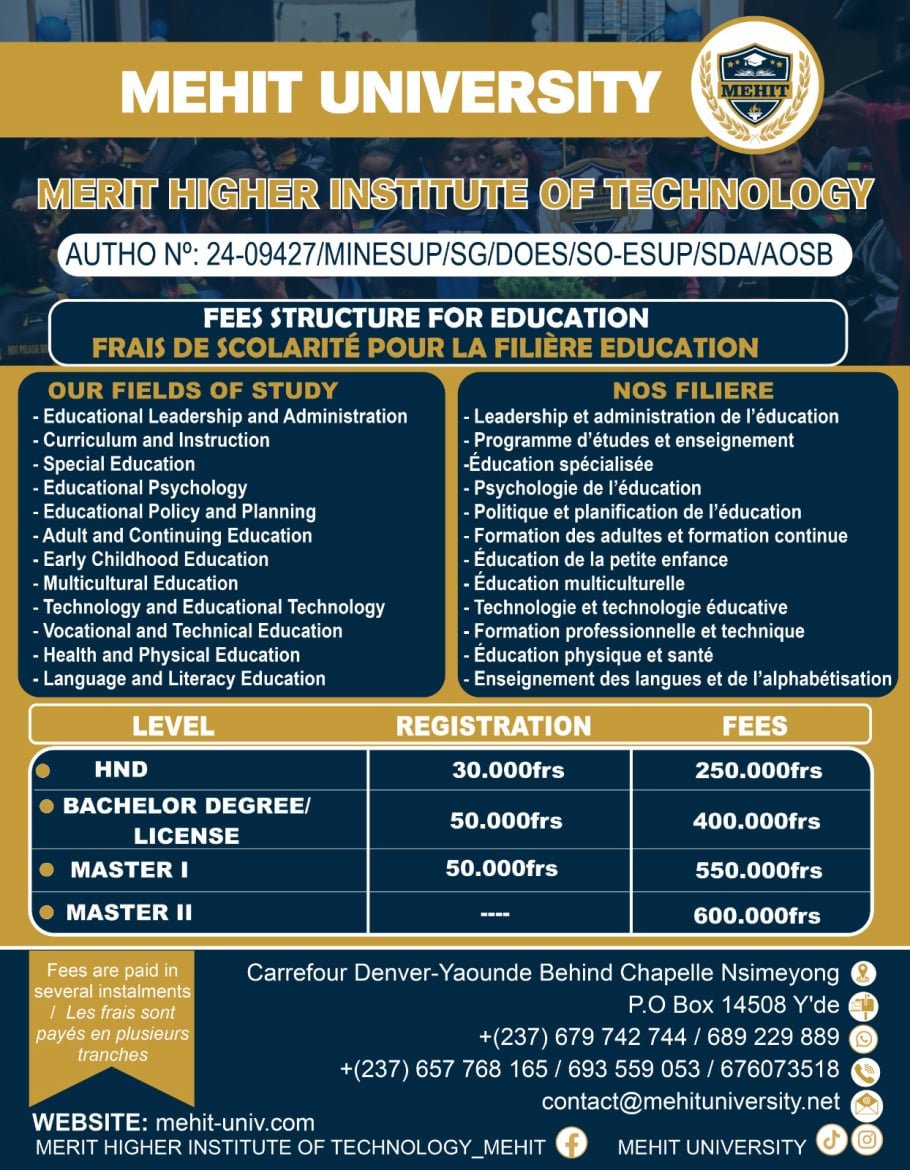
Click the fee structure to view it in full size.
The School of Education combines professional practice, educational research, technology, leadership, and learner-centred training to prepare graduates for meaningful careers across modern educational environments.
Connect educational theory with practical teaching, classroom experience, and professional practice.
Learn from lecturers and practitioners with academic, teaching, leadership, and professional experience.
Develop confidence through observation, supervised practice, and experience in real educational environments.
Build competence in the digital platforms, multimedia tools, and technologies transforming modern teaching and learning.
Learn to investigate educational challenges, analyse evidence, and develop informed solutions for improving learning.
Prepare for responsibilities in educational administration, coordination, institutional management, and academic leadership.
Understand how to support different learners, abilities, backgrounds, and educational needs with empathy and professionalism.
Graduate with knowledge and competencies relevant to education, counselling, training, leadership, research, and development careers.


Begin a career where your knowledge, leadership, creativity, and commitment can influence lives and shape generations.